
Precautions on booster seats
WARNING
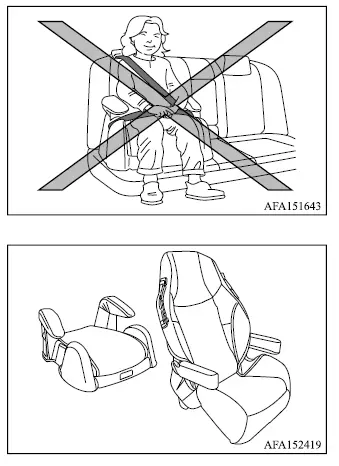
- If a booster seat or vehicle seat belt is used incorrectly, the risk of serious injury or death to the child during sudden braking or a collision increases significantly:
- Make sure the shoulder portion of the belt remains clear of the child's face and neck, and position the lap portion low across the hips rather than over the stomach.
- Never route the shoulder belt behind the child's back or underneath the child's arm. Either position prevents the belt from restraining the upper body correctly.
- Install a booster seat only in a seating position equipped with a three-point lap and shoulder belt.
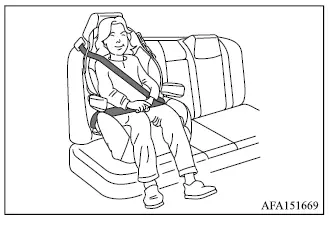
Booster seats are available from several manufacturers in a range of sizes and designs. When selecting a booster seat for the Mitsubishi Outlander, consider the following points:
- Choose only a booster seat carrying a certification label confirming compliance with Federal Motor Vehicle Safety Standard 213 or the Canadian Motor Vehicle Restraint Systems and Booster Seats Safety Regulations (RSSR).
- Place the booster seat in the intended seating position and confirm that it is compatible with the vehicle seat shape, seatback and lap and shoulder belt arrangement.
- Make sure the child's head is adequately supported by the booster seat, the vehicle seatback or the correctly positioned head restraint.
- If the booster seat fits the vehicle, place the child in it and check all available adjustments. Confirm that the seat supports the child correctly and positions the vehicle belt as intended. Follow every installation and usage procedure supplied by the booster seat manufacturer.
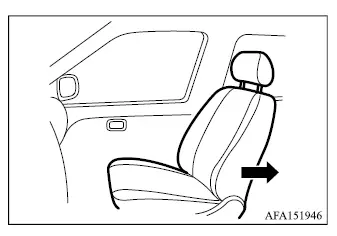
All U.S. states and Canadian provinces or territories require infants and small children to be secured in an approved child restraint whenever the vehicle is being operated. Drivers and caregivers must also follow any booster seat requirements that apply in their location.
The instructions in this section apply to booster seat installation in an appropriate rear seating position or on the front passenger seat of the Mitsubishi Outlander.
Booster seat installation
WARNING
- To reduce the risk of injury to the child, do not activate the lap and shoulder belt Automatic Locking Retractor [ALR] mode while using a booster seat. The seat belt must remain in its normal occupant-use mode.
CAUTION
- Do not remove the head restraint when installing a booster seat. The head restraint may be adjusted when necessary to obtain a stable fit, but it should remain installed as directed.
Before installing a booster seat, review all warnings, cautions and instructions in the earlier "Child safety," "Child restraints" and "Booster seats" sections.
Follow these steps to install a booster seat in a rear seating position or on the front passenger seat:
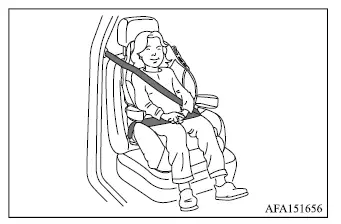
1. If a booster seat must be installed on the front passenger seat, move the seat to its rearmost position before placing the child inside.
Do not install a LATCH-fixed booster seat in the second row center seating position.
2. Position the booster seat securely on the vehicle seat. A booster seat must always face forward.
Follow the booster seat manufacturer's instructions for placement, belt routing and use.
- Move the seat where the booster seat will be installed to its most rearward position.
- Adjust the seatback three positions rearward from its most upright setting.
Front passenger position
3. Position the booster seat so it rests flat and remains stable against the vehicle seat and seatback.
If necessary, adjust the head restraint to obtain the correct booster seat fit. If the booster seat cannot sit securely because of the head restraint or seatback shape, use another approved seating position or select a different booster seat that is compatible with the Mitsubishi Outlander.
If a seating position does not provide suitable head support or prevents the booster seat from fitting correctly, do not use that position. Try another seating location or a different booster seat.
4. Route the lap portion of the seat belt low and snug across the child's hips or upper thighs, not across the abdomen. Follow the booster seat manufacturer's belt-routing instructions carefully.
5. Pull the shoulder portion of the belt toward the retractor to remove excess slack. Position the belt across the center of the child's chest and over the top-middle area of the shoulder. It must remain clear of the neck and face without slipping off the shoulder. Follow the booster seat manufacturer's instructions for any belt guides provided with the seat.
6. Follow all warnings, cautions and fastening instructions described in the "Seat belts" section. Make sure the belt is flat, untwisted and securely latched into the correct buckle.
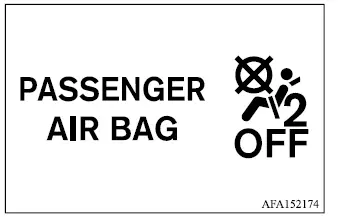
7. If the booster seat is installed on the front passenger seat, place the ignition switch in the ON position. The front passenger airbag status light
 may illuminate or remain off depending on the child's size and the design of the booster seat. The front passenger airbag status light is located near the inside rearview mirror.
