
The condition of the battery is essential for reliable engine starting and proper operation of the Mitsubishi Outlander electrical system. Inspect the battery regularly and keep it in good condition.
If battery performance appears weak or starting becomes unreliable, have the battery and charging system tested by an authorized Mitsubishi Motors dealer or another qualified repair facility.
- Keep the battery case and upper surface clean and dry.
Clean accumulated dirt or corrosion residue with a solution of baking soda and water, taking care not to allow the solution to enter the battery.
- Inspect each battery terminal for corrosion.
If corrosion is present, clean the affected areas with a solution of baking soda and water. After the terminals and clamps have been cleaned and tightened, apply suitable grease to the posts and clamps to help reduce further corrosion.
- Make sure all battery terminal connections are clean, secure, and properly tightened.
- If the Mitsubishi Outlander will not be used for 30 days or longer, disconnect the negative (-) battery terminal cable to help prevent unnecessary battery discharge.
NOTE
- Avoid operating conditions that can cause excessive battery discharge and potentially result in a no-start condition, including the following:
1. Installing or using electronic accessories for extended periods while the engine is not running, such as phone chargers, GPS devices, DVD players, or similar equipment. 2. Driving the vehicle infrequently and/or using the Mitsubishi Outlander mainly for short trips.
Under these operating conditions, the battery may require periodic charging to maintain an adequate state of charge and preserve battery performance.
NOTE
- Make sure the battery is mounted securely and cannot move in its tray. Also inspect each battery terminal connection and confirm that it is properly tightened.
WARNING
- Do not expose the battery to open flames, sparks, or other ignition sources. Hydrogen gas produced by the battery is explosive. Do not allow battery fluid to contact your skin, eyes, clothing, fabrics, or painted vehicle surfaces. After handling the battery or battery caps, do not touch or rub your eyes. Wash your hands thoroughly. If battery acid contacts your eyes, skin, or clothing, immediately flush the affected area with clean water for at least 15 minutes and seek medical attention.
- Whenever working on or near the battery, wear suitable eye protection and remove rings, watches, bracelets, and other jewelry that could create an electrical short.
- Battery posts, terminals, and related accessories contain lead and lead compounds.
Wash your hands thoroughly after handling these components.
- Keep the battery and battery-related materials out of the reach of children.
- Never disconnect the battery while the Mitsubishi Outlander engine is running, as this may damage electrical or electronic components.
- Never short-circuit the battery terminals. A short circuit can cause rapid overheating, battery damage, and a risk of injury.
- Battery electrolyte consists of corrosive diluted sulfuric acid. If it spills onto nearby vehicle components, it may crack, stain, discolor, or otherwise damage them. Contact with the skin or eyes can cause severe burns or loss of vision.
Observe the following precautions when handling battery electrolyte:
- If electrolyte contacts plastic components or other nearby vehicle parts, wipe it away promptly with a soft cloth or chamois dampened with a solution of water and neutral detergent. Then rinse the affected area immediately and thoroughly with plenty of clean water.
Wash your hands thoroughly after handling these components.
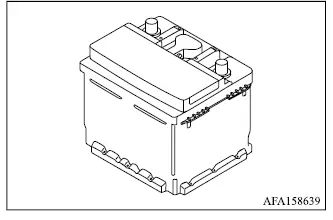
NOTE
- Do not attempt to open, remove, or pry up the top section of the battery.
The battery installed in the Mitsubishi Outlander is not equipped with removable vent caps and should not be opened for routine maintenance.
Disconnection and connection
Before disconnecting the battery cables, stop the engine and make sure the vehicle is switched off. Disconnect the negative (-) terminal first, followed by the positive (+) terminal. When reconnecting the battery, connect the positive (+) terminal first and then the negative (-) terminal before starting the Mitsubishi Outlander.
NOTE
- Open the protective terminal cover before disconnecting or reconnecting the positive (+) battery terminal.
- Loosen the clamp nut on the positive (+) terminal before removing the battery cable from the positive terminal. When reconnecting it, make sure the connection is secure.
Jump starting
If jump starting is required, follow the procedure described in "Jump starting". If the Mitsubishi Outlander engine still does not start after the jump-starting procedure has been performed correctly, the battery may require replacement. It is recommended that you visit an authorized Mitsubishi Motors dealer for inspection and service.
Variable voltage control system
CAUTION
- Do not connect the ground wire of electrical accessories directly to the battery terminal. Doing so can bypass the variable voltage control system and may prevent the vehicle battery from charging correctly or completely.
- Whenever practical, operate electrical accessories while the engine is running to reduce unnecessary discharge of the Mitsubishi Outlander battery.
The variable voltage control system monitors the amount of electrical discharge from the battery and regulates the voltage produced by the generator according to the vehicle's electrical requirements.
