WARNING
- Before working on the spark plugs, make sure the engine and ignition switch are off and the parking brake is applied securely.
CAUTION
- Use the correct spark plug socket when removing or installing the spark plugs. An incorrectly sized or unsuitable socket can damage the spark plugs.
Replacing spark plugs
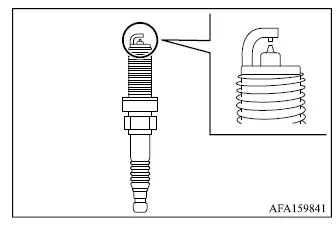
If spark plug replacement is required, it is recommended that the work be performed by an authorized Mitsubishi Motors dealer.
Iridium platinum-tipped spark
plugs
Iridium platinum-tipped spark plugs have a considerably longer service life than conventional spark plugs and therefore do not require replacement as frequently. Do not attempt to extend their service life by cleaning or regapping used iridium platinum-tipped spark plugs.
When replacement is necessary, always install the recommended spark plugs or equivalent plugs that meet the required specifications for the Mitsubishi Outlander.
READ NEXT:
To remove the air cleaner filter, release lock pins 1 and pull the air cleaner unit upward in direction 2.
The air filter is not designed to be cleaned and reused. Replace it when required.
Cleaning
If the windshield does not become clear after operating the windshield washer, or if the wiper blades chatter, skip, or leave streaks while moving, wax, dirt, road film, or other contaminati
If the braking system does not operate normally or braking performance appears reduced, have the Mitsubishi Outlander inspected as soon as possible. It is recommended that you visit an authorized Mits
SEE MORE:
WARNING
Radio waves emitted by the transmitter may adversely affect certain electronic medical devices. Anyone who uses a pacemaker should consult the manufacturer of the medical equipment regarding possible effects before using the F.A.S.T.-key system.
The transmitter emits radio waves whenev
Most common factors contributing
to vehicle corrosion
Accumulation of moisture-retaining dirt, mud, road debris, and other contaminants inside body panel sections, cavities, seams, and other areas where moisture can remain trapped.
Damage to the paint finish or other protective coatings cause

