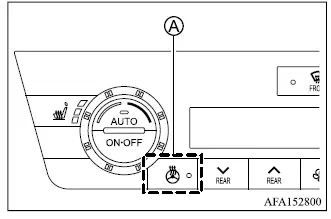
The heated steering wheel system is designed to provide heating only when the surface temperature of the steering wheel is below 68ºF (20ºC).
After starting the engine, push heated steering wheel switch A to activate the system. The indicator light in the switch will illuminate to show that the function is turned on.
If the steering wheel surface temperature is below 68ºF (20ºC), the system will warm the steering wheel and then cycle the heater on and off as necessary to maintain a surface temperature above 68ºF (20ºC).
The indicator light remains illuminated for as long as the heated steering wheel system is switched on.
The heated steering wheel system turns off automatically after approximately 30 minutes of operation.
To switch the system off manually before the automatic shutoff, push the heated steering wheel switch again. The indicator light will turn off.
NOTE
- If the steering wheel surface temperature is already above 68ºF (20ºC) when the switch is turned on, the system will not apply heat. This is normal operation and does not indicate a malfunction.
READ NEXT:
WARNING
Do not use, or allow an occupant to use, the seat heater if the person cannot adequately monitor increasing seat temperature or has a reduced ability to feel pain in areas of the body that
CAUTION
Do not place blankets, cushions, seat covers, or other materials on the seat that could restrict airflow through the ventilation system. Do not use a seat cover that may block the ventilat
The Rear Seat Alert system operates under specific conditions to remind the driver that an item or passenger may be present in the rear seating area. Before leaving the Mitsubishi Outlander, always ch
SEE MORE:
WARNING
Failure to operate the Mitsubishi Outlander in a safe, controlled, and prudent manner may result in loss of vehicle control, a collision, or a rollover.
Stay alert and drive defensively at all times.
Follow all applicable traffic laws and adjust your driving to road and traffic c
The front airbags, knee airbags, seat-mounted side airbags, curtain airbags and seat belt pretensioners are designed for a single activation only.
After deployment, the SRS airbag warning light will normally remain illuminated unless the warning circuit itself has been damaged. Activated airbag a

