
When the system detects that the radar sensors are blocked or their detection capability is significantly reduced, system operation is deactivated automatically. The "Unavailable Side Radar Obstruction" warning message appears on the multi-information display to inform the driver that radar-based assistance is temporarily unavailable.
The affected systems remain unavailable until the condition preventing proper radar operation has cleared and normal sensor detection can resume.
Temporary environmental conditions may interfere with the radar sensors. Splashing water, heavy mist, fog, or similar conditions around the rear of the Mitsubishi Outlander can reduce sensor performance and cause the system to become temporarily unavailable.
Radar detection may also be obstructed when ice, frost, dirt, or other material accumulates on or around the radar sensor areas.
NOTE
- The BSW system, RCTA system, and ABSA system use the same radar sensors.
If the BSW system becomes unavailable because of a radar sensor malfunction, the RCTA and ABSA systems will also stop operating because they rely on the same sensor information.
Action to take: Once the conditions interfering with radar operation are no longer present, the system will resume operation automatically.
System malfunction
If a malfunction is detected in the RCTA system, the system turns off automatically. A "Malfunction" warning message appears on the multi-information display to indicate that normal RCTA operation is not available.
NOTE
- The BSW system, RCTA system, and ABSA system share the same radar sensors.
If the BSW system stops operating because the radar sensors are temporarily unavailable, the RCTA and ABSA systems will also become unavailable until proper radar operation is restored.
Action to take: Stop the Mitsubishi Outlander in a safe location, switch off the engine, and then restart it. If the warning message remains displayed after restarting the engine, have the system inspected. It is recommended that this inspection be performed by an authorized Mitsubishi Motors dealer.
System maintenance
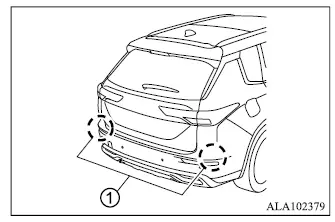
The two radar sensors 1 used by the RCTA system are installed near the rear bumper. Keep the areas around both sensors clean so they can monitor surrounding traffic without unnecessary obstruction.
Temporary environmental conditions such as splashing water, mist, or fog may interfere with radar detection and can temporarily reduce or interrupt system operation.
Ice, frost, dirt, or other debris covering the sensor areas may also block the radar signals and prevent the system from operating correctly.
Inspect the areas around the radar sensors regularly and remove any objects, dirt, ice, or other material that could obstruct sensor detection.
Do not attach stickers, including transparent materials, install accessories, or apply additional paint near the radar sensors. Materials or modifications in these areas may interfere with radar operation.
Do not strike, impact, or otherwise damage the areas surrounding the radar sensors. If the rear bumper or the area near a radar sensor is damaged in a collision, it is recommended that the Mitsubishi Outlander be inspected by an authorized Mitsubishi Motors dealer.
